A system that works is not necessarily a system that can be trusted.
Businesses invest in ERP platforms, automation and AI. Yet critical questions can remain unanswered: Who can change transactions? Are approvals independently controlled? Can sensitive information be accessed without authorisation?
An information systems audit looks beyond whether software functions. It examines the controls that protect the process and the integrity of business information.
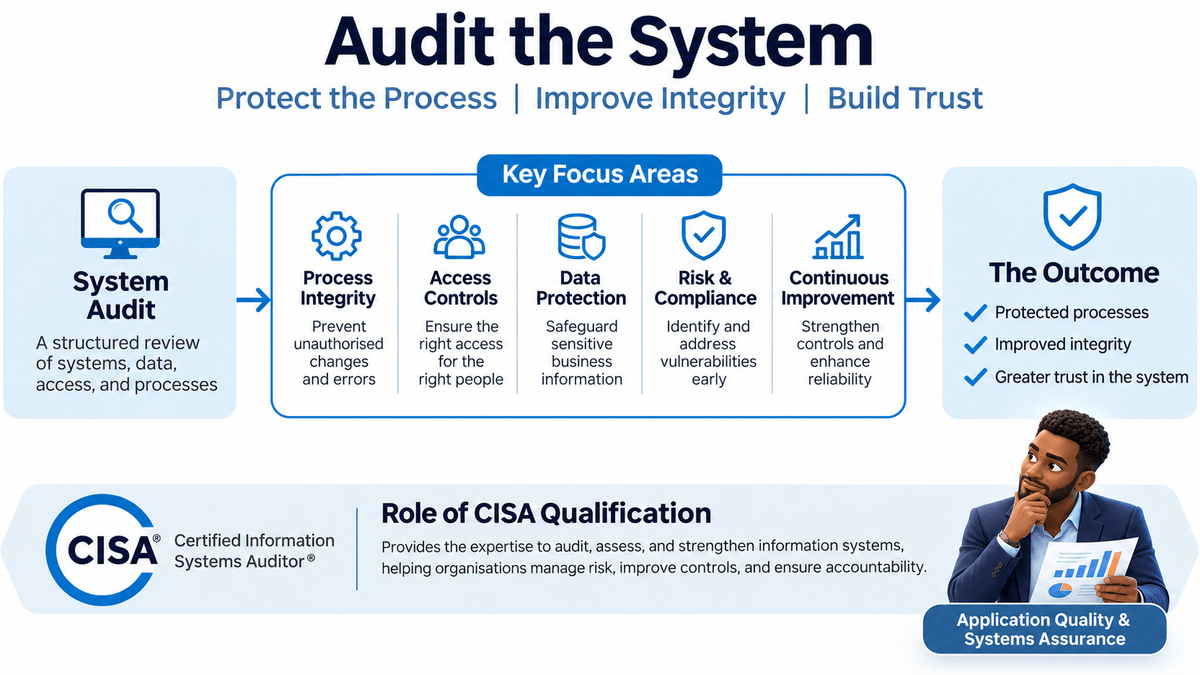
Five areas deserve attention:
- Process integrity: prevent errors, manipulation and unauthorised changes.
- Access controls: give people only the permissions they need.
- Data protection: safeguard sensitive operational and financial information.
- Risk and compliance: identify weaknesses, test controls and address gaps.
- Continuous improvement: strengthen reliability without introducing unnecessary friction.
Where does CISA fit?
The Certified Information Systems Auditor (CISA) credential from ISACA recognises expertise in information systems auditing, governance, risk, controls and protection of information assets. CISA-qualified professionals can assess system controls, gather evidence and recommend improvements that support stronger accountability.
For leaders, the practical next step is simple: map a critical process—from data entry to approval and reporting—and test who can do what, what evidence is retained and where failures could go undetected.
Don't just ask whether your system works. Ask whether you can trust it.
ACE Analytics | Protect the Process. Improve Integrity. Build Trust.
.....................................